
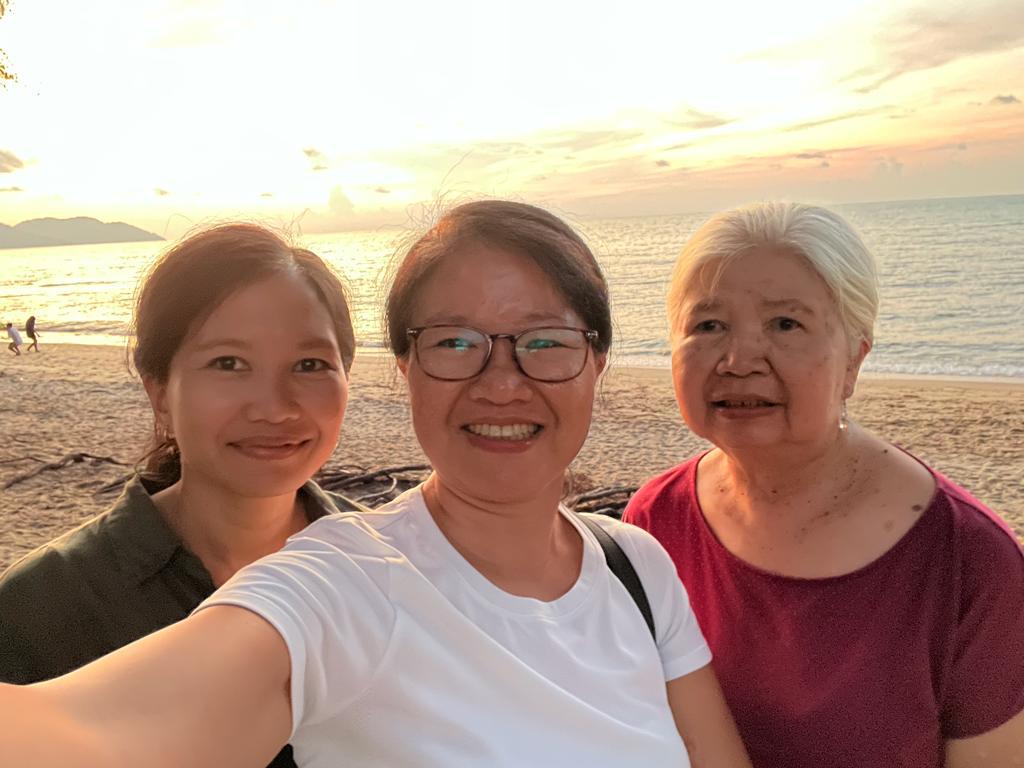
By Debbie Loh
“Your mum was such a faithful servant of God, how could she get cancer?” a friend asked when my mother was diagnosed in February 2022.
For the last three-and-a-half years of her life, Mum lived with Stage 4 lung cancer. During this time, I never heard her ask that question of herself. She died on 19 May 2025, age 83, not of the disease but from stroke complications.
Although it would be incomplete to remember a person based on the last few years of life alone, I believe the final days show the fruit of one’s life experiences and relationship with God. If we rely on years of ministry and service to God as a bargaining chip against terminal illness or other hardship, we need to rethink who God is to us.
Lydia Kartika Kristanto, known to many as just Lydia or Mrs Loh, was born Tan Giok Lan in Semarang, Java Tengah, Indonesia, in 1942. Her father, Tan Joe Tak, raised her and her younger brother singlehandedly.
The loss of her mother at a young age, as well as the turbulent times in Indonesia then, were important forces that shaped her. They set her off on an inner journey to find the mother’s love missing from her life, discovered later, only when she became a Christian.
By mum’s own accounts and from her memoir, Nine Jewels, she was fashionable and even owned several pairs of shoes to match her different coloured outfits.
Quiet, gentle, perhaps even timid, her memoir records a shift in priorities and values after she became a Christian at 23. This happened on Christmas Day in 1965, the year of Indonesia’s military coup that ushered in Suharto’s presidency.
Her new faith saw her buying fewer shoes, so much so that her father noticed. Three years later, at age 26, she left home and her father’s glass-cutting business, which she was expected to take over, to Singapore for ministry training at the Discipleship Training Centre (DTC).
By then, she had earned a Bachelor in Education in English Language from Universitas Sanarta Dharma in Yogyakarta. As with all Chinese in Indonesia then, she had also changed her legal name on government orders amid anti-communist fervour. She could never use Tan Giok Lan for official purposes again.
At DTC, she met my dad, Loh Soon Choy, four years her senior. They married in 1971, in Singapore, launching 49 years of marriage and ministry together, which ended with my father’s death from metastatic prostate cancer in November 2020.
Mum was a ministry leader and Bible teacher in her own right, not from the front nor before large crowds, but on the sidelines and with smaller groups. Friends remarked how Rev. Loh would finish her sentences for her and dominate a conversation while she sat quietly next to him.
Little did they know the weight of the decisions and tasks she bore within our family as finance minister, home affairs minister and health minister.
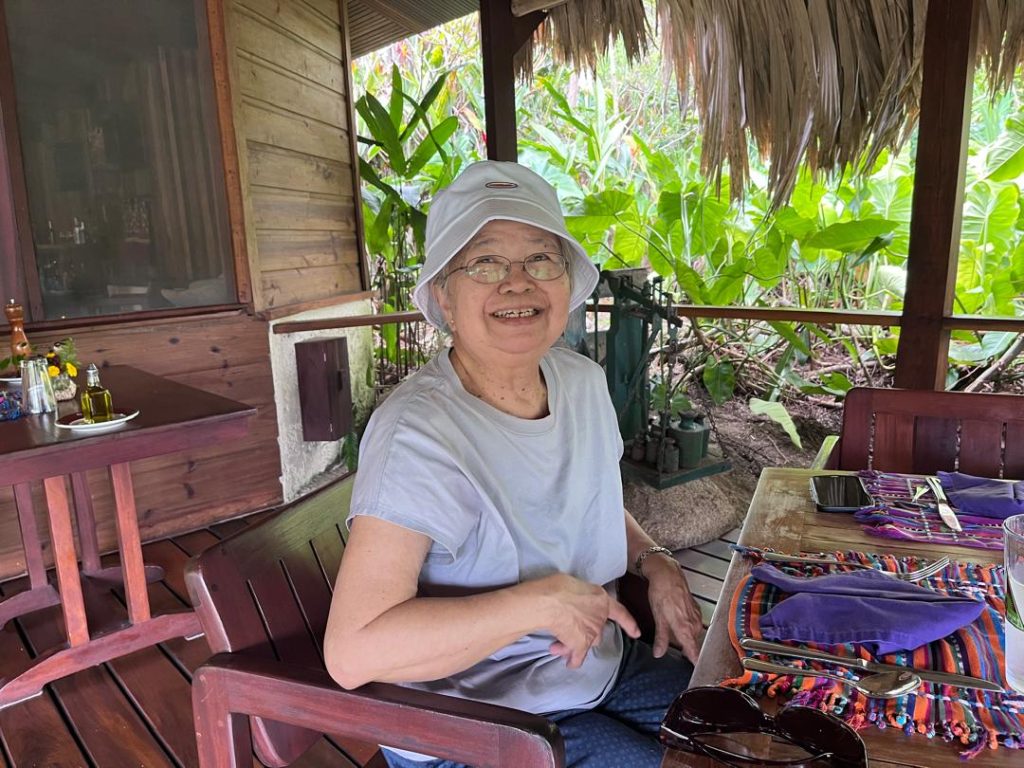
Before my sister Miriam was born (ten years after me), Mum juggled looking after me and participating in the now-defunct Christian Women’s Convention, an inter-denominational gathering that held regular seminars in the 1980s and 1990s.
During this period, she also worked with the Bible Society of Malaysia on projects. A translation yproject, which began sometime in the mid-1980s, stands out among my childhood memories. I watched mum stuff bundles of translation papers between cupboards and the wall to hide them. “Why?” I asked. “In case the police come to our house,” she replied matter-of-factly.
It was the time of Operasi Lalang in 1987, when the government clamped down on dissent, arrested over 100 people and shut three newspapers. For mum, it brought back childhood memories of soldiers doing house-to-house checks for communists. In the 1990s, she returned to similar work, helping to refine and improve earlier translation efforts.
I think of Mum as “cautiously adventurous”. She appeared to be a meek and careful housewife, overthinking certain matters to the point of anxiety. Yet she took on risky ventures and tasks that pushed her out of her comfort zone, such as preaching and teaching.
She brought this attitude into life with cancer. The weight of the disease disheartened her appetite for travel and heightened her fears about the long journey to visit Miriam’s family in Belize. But she did it anyway, focusing on the time she would get to spend with her grandchildren there.
The effects of treatment depleted her energy, and combined with other age-related issues such as hearing loss and poor eyesight, diminished the appeal of going for Bible studies with her ladies’ group and even to Sunday worship. She grew sad that she could no longer enjoy reading comfortably or listen to music. There were days of silence, when she quietly mourned her reduced physical abilities and lamented that she “was no longer who [she] was before”.
Mum moved in to live with my husband and me from 2023 until her passing. I saw her wrestle with internal struggles, but knew she had overcome them for that moment when she would enthusiastically declare she wanted to go to Sunday service, or join in an outing.
“Even if I can’t hear the sermon clearly or get much out of it, it is good for me to see my friends and for them to see me,” she said. This, I learnt, is the ministry of being present.
Another pivotal moment earlier in her life was her coming to terms with her father’s sudden death from a hit-and-run accident. This was a personal revelation about “leaning on Jesus” instead of on her father, who had been the pillar of her life.
The image of everlasting arms holding her was one that I believe stayed with her for the rest of her life, as she spoke often of such arms lifting her up whenever she felt down.
Some reading this may recall her testimony shared in church and with a few groups, that in her shocked state upon hearing of her Stage 4 diagnosis, the image that came to her mind was of a shining man standing on a road ahead of her. Turning to face her, he stretches out his hand and says, ”Come, I will walk with you”.
Mum took that hand which held hers till her return Home. In turn, she brought into the lives of others lessons of grace, peace and true identity; of only and forever being a child of God even when you are no longer physically “useful”, and when all other roles have ceased.
Back then, I had no answer to my friend’s question posed at the beginning of this article. To say that illness was simply a part of living in a fallen world is not satisfactory. Why are some afflicted and others not?
After accompanying my mum in her final years, this is my conclusion: There are many roads Home. The pain of illness is the way for some, like my mum, and dad, too. To those who are given this road, it is also their final testimony, their last opportunity to show the rest of us what faithfulness means.
Mum, and Pa, thank you for your examples. See you again on that beautiful shore.
Debbie Loh is the elder daughter of the late Rev. Loh Soon Choy and Lydia Loh. Rev. Loh served in Asian Beacon as an editorial board member, chairman of the board (1989 to 1992) and as an advisor until his passing in 2020.


