
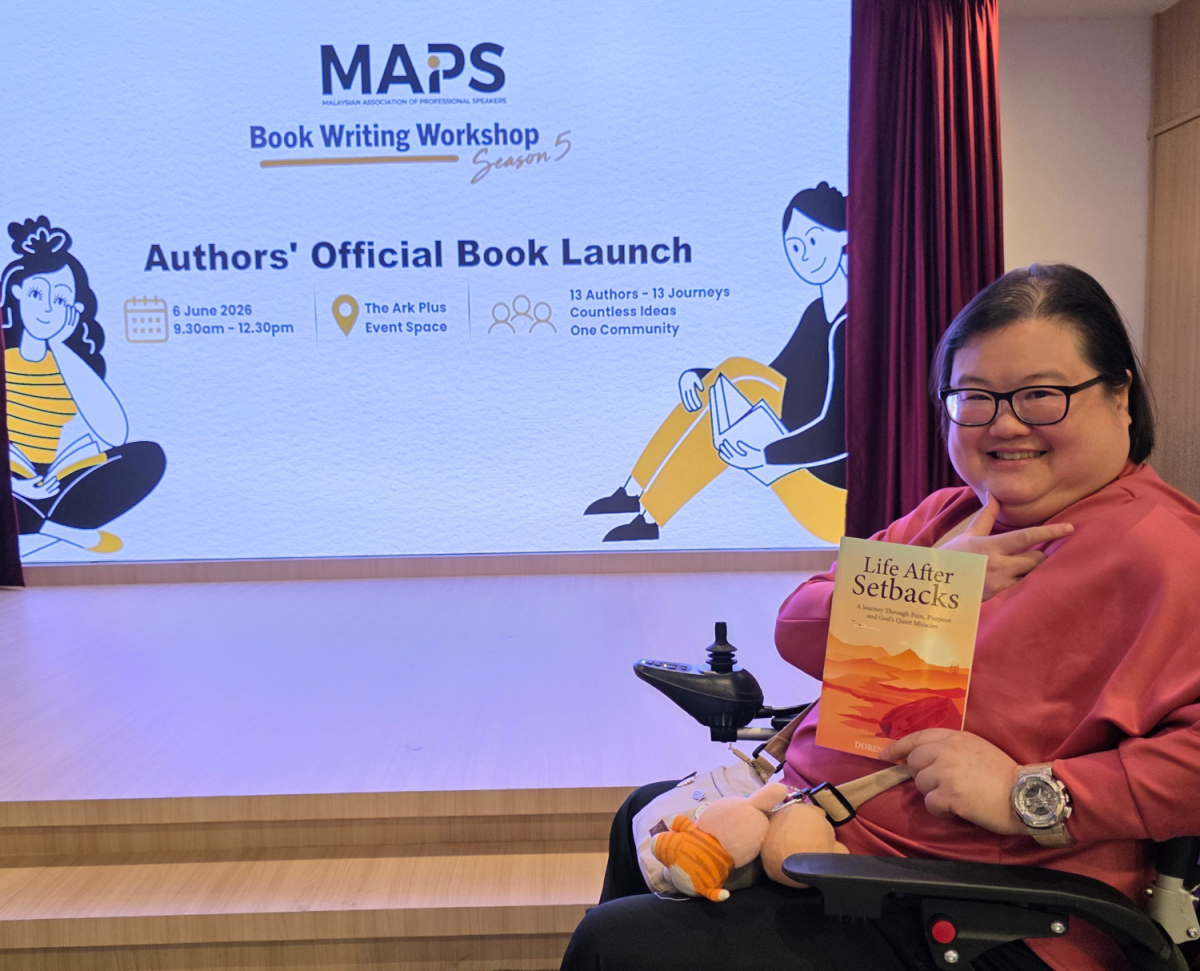
by Dorene Chai
I was full of ambition and, perhaps rather arrogantly, declared that my independence was my greatest treasure. I did not need anyone. I did not think much about God or my faith. Life felt complete, despite the raging COVID pandemic outside my apartment windows.
Then one morning in 2020, I suddenly found myself walking like a professional drunk, except I hadn’t had a single drop of alcohol.
It happened almost overnight, without any warning. There was no significant pain or discomfort. I remember going to the nearby market for groceries and walking so unsteadily that I almost had a panic attack over the thought of falling in the middle of the fresh fish stalls.
Other strange things followed. I developed severe constipation and incontinence, including some very embarrassing moments – like losing control of my bladder right in front of my house, just a few steps from the toilet. Over the following weeks, things got worse.
Because of COVID, I was afraid to go to the hospital. But one day, while visiting my sister, we were having tea sitting on the floor. When it was time to get up, no matter how hard I tried, I simply couldn’t rise. My legs were like jelly, refusing to cooperate.
That was when the thought finally hit me: This is not normal.
At first I thought it was my bad knees, damaged in a car accident nearly a decade earlier. But after examining me, the orthopaedic surgeon said no and immediately referred me to a neurologist.
My first thought was: Stroke.
I must be having a stroke, or perhaps I’d already had one. Fear gripped me. Am I going to become a vegetable?
After a very thorough, and very claustrophobic, two-and-a-half-hour MRI scan, the neurologist announced that I had a rare autoimmune inflammatory disorder called transverse myelitis.
I had never even heard of the named diagnosis. Somewhere in my frightened mind, though, I told myself: At least it isn’t a stroke. Or the big C. The shock was so overwhelming that the tears came on their own. I sat there staring at my neurologist with 1,001 questions racing through my mind.
Yet all I managed to ask was, “When can I walk again?”
More questions followed in my mind: Why? Why me? Why now? What is going to happen to my life? Was God punishing me for backsliding? Was it something I did? Bad karma?
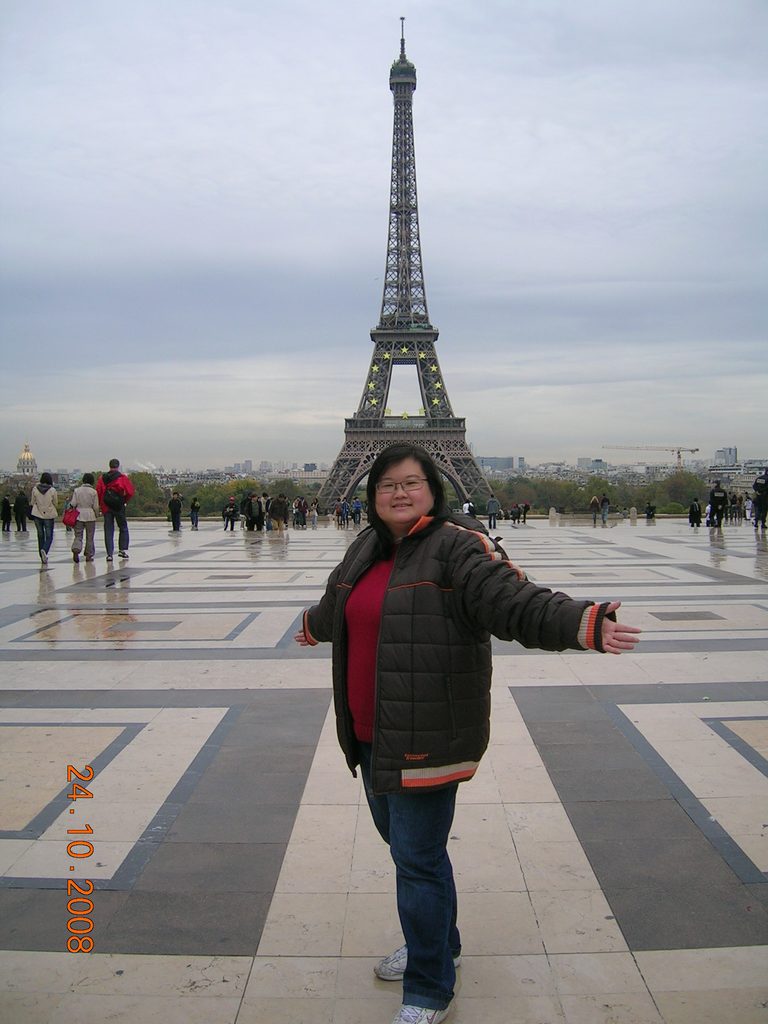
Learning to trust without answers
After the shock came overwhelming fear, followed by anger. Anger towards the world, towards everyone, and even towards God. This is so unfair!
Such a typical thing to think. But I was at the peak of my career and only turning 40. I could not understand why this was happening to me.
As I lay on the hospital bed like a beached whale with jello legs and arms, I sank into despair. Yet fragments of Viktor Frankl’s words came back to me: “Somewhere between what happens to us and how we respond, there is a space in which we choose how to respond.”
Even in this, I still had a choice. Do I run away from God or do I run towards Him?
I was still angry about the whole situation. But there was little I could physically do about it. I couldn’t exactly fling my arms around or kick the furniture, figuratively speaking.
So there I was, lying ‘defeated’ on my hospital bed, having what I can only describe as an existential crisis.
I wish I could tell you the process of running back to God was neat and tidy, but it wasn’t. It was messy. There were nights of silent screaming at the empty ceiling and lots of big, fat tears.
Then, one night, I cried out, “Where are You, God?” Deep within me, I heard a small, still voice: I am here. There was no thunderous voice. No huge gust of wind. It reminded me of Elijah’s encounter with God in 1 Kings 19:11–14: “not in the dramatic wind, earthquake or fire, but in the gentle whisper.”
Those three words brought an assurance and peace I could not explain.
Yet even after knowing that everything was in God’s hands, I still had questions. So, what now? What’s the plan?
Heaven stayed silent.
I found myself searching for God’s promise about my future. The words came to me in fragments before I pieced them together as Jeremiah 29:11: “God knows the plans He has for me, plans to prosper and not harm me, plans to give me hope and a future.”
I held on to that promise, but I also had my own idea of how God should fulfil it. I thought to myself: If God planned to prosper me and not harm me, then surely He could heal my legs, restore my mobility and let me return to the way I was before all this happened. Could He please just apply some heavenly liquid paper and erase the whole thing?
In my questioning, God remained silent.
When grace doesn’t look like what we expect
Looking back, I can see God’s grace in many parts of my life.
He surrounded me with prayer warriors and faithful friends and relatives. My mother refused to see me keep drifting away from God. She grounded me in God’s promises without being pushy. She listened without judging, lecturing or trying to explain my suffering away.
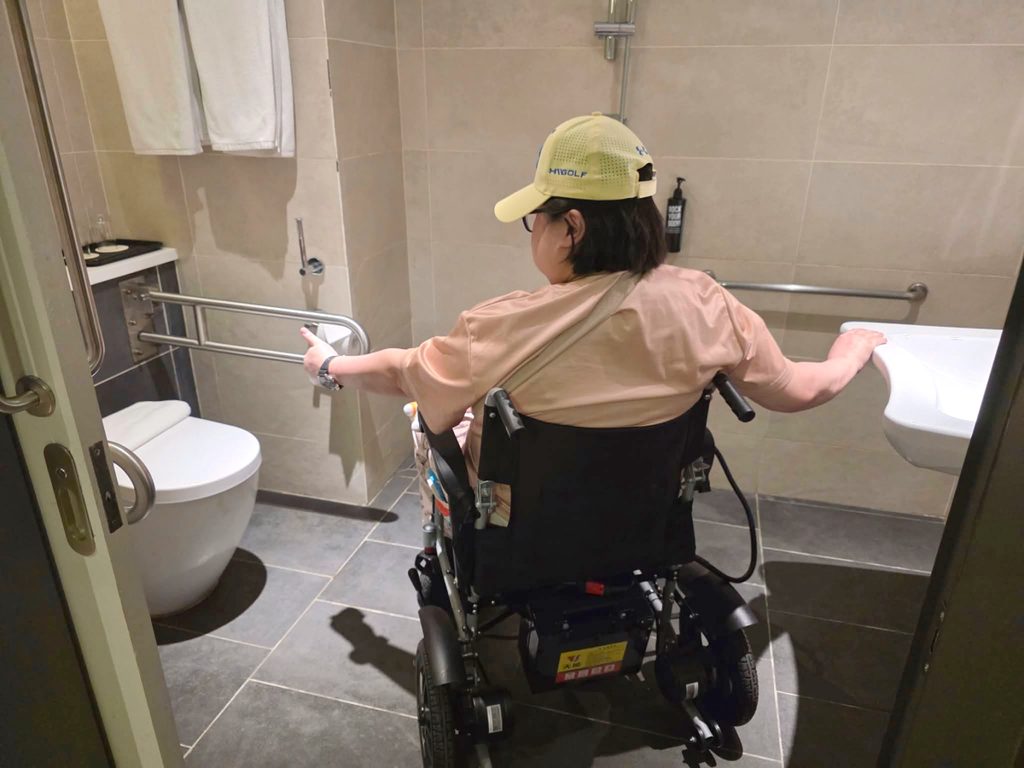
There were also days when the illness overwhelmed me. Something as ordinary as going to the toilet became a major challenge. I felt helpless, having to depend on others for things I’d previously done without a second thought.
Yet God’s grace appeared there too. God sent people to care for me in the hospital, and I truly felt His strength in my weakness. Paul writes in 2 Corinthians 4 that we can be pressed on every side by troubles without being crushed. I began to understand those words differently. My body might be weak, but somehow my spirit could still be renewed day by day.
In the past, I thought God’s grace meant career success and continuous financial blessing. Today, grace looks different.
Sometimes it’s a willing hand holding you when you’re falling. Sometimes it’s someone praying to God on your behalf. Sometimes it’s having peace in your heart despite the distress happening around you.
I don’t believe the illness itself was good, and I wouldn’t pretend the suffering became good just because I learned something from it. But over the years, I’ve come to understand Romans 8:28 differently: God can still work through what is painful and unwanted, and somehow bring something meaningful out of it.
Perhaps grace isn’t always about erasing what happened. Sometimes it’s about God giving us what we need to keep going through it.
Learning to live life without a map
So, what does life look like now? Well, I still don’t have a map.
Jesus did not miraculously courier me a detailed one, complete with directions and a nicely highlighted route.
I still make plans. I still dream about the future. I still wonder what comes next. The difference is that these days, I try not to hold on to those plans quite so tightly.
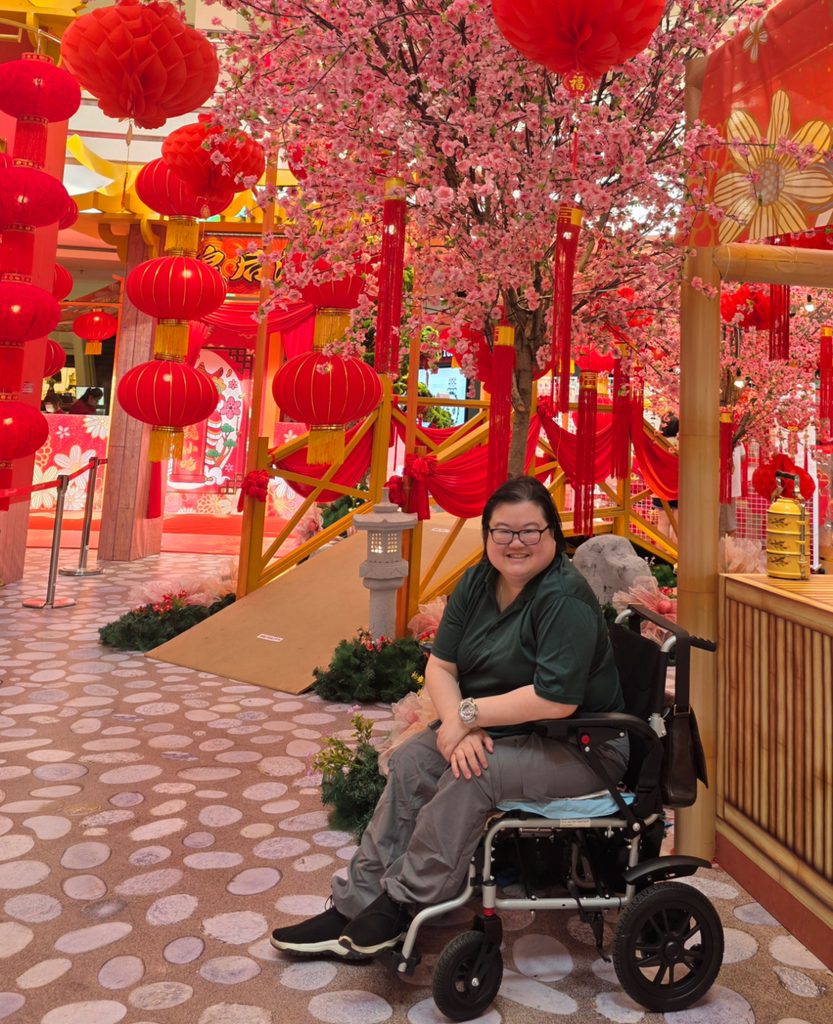
Life looks different now. I experience much of it from a wheelchair, but that hasn’t stopped me from dreaming. I still travel when I can, meet people, enjoy good food, and keep making plans for what I’d like to do next. My world did not end with the diagnosis. It became a different world from the one I had planned.
I am still asking God questions, still trying to understand where He is taking me.
Somewhere along this journey, I also began writing.
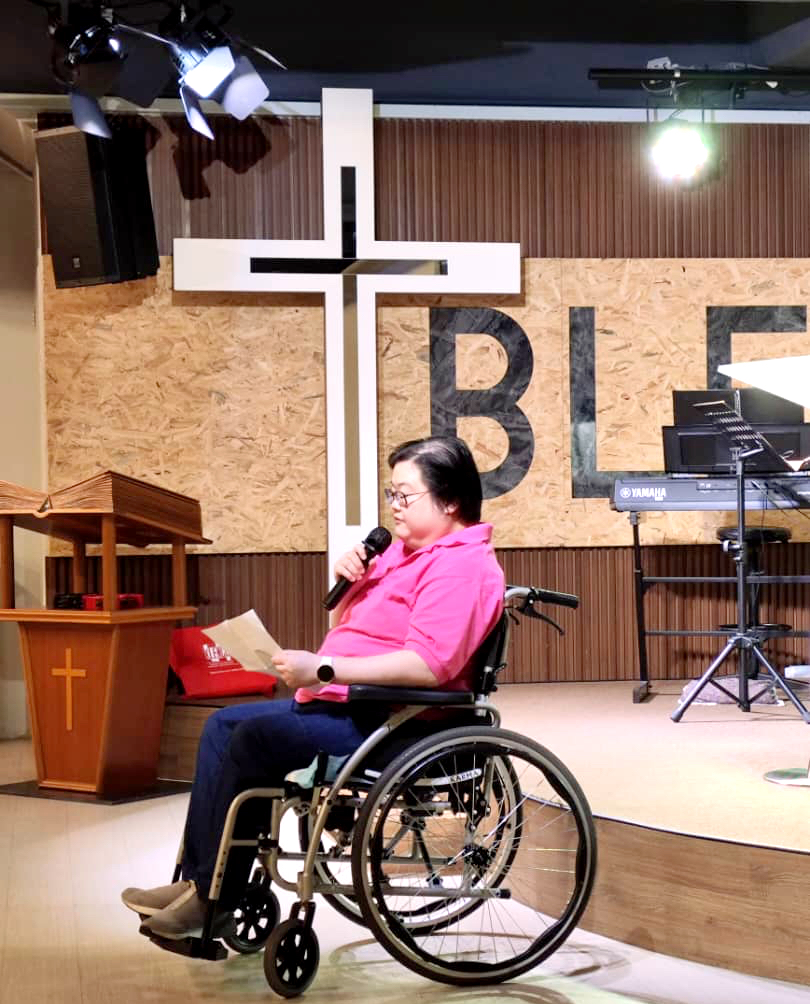
At first, I was trying to make sense of what I was going through and sharing a few reflections along the way. Those writings became my book, Life After Setbacks: A Journey Through Pain, Purpose and God’s Quiet Miracles.
I didn’t write the book because I had figured everything out. I wrote the book because the journey of questioning, wrestling and making sense of God in this broken world is important. I wanted to share what I was learning in the middle of my setbacks in the hope that someone else in their own difficult season might find a little encouragement to keep going.
I still don’t know exactly where this journey is taking me. I still don’t have the map, but I know Who I’m travelling with.
Life After Setbacks – A Journey Through Pain, Purpose and God’s Quiet Miracles is a Christian inspirational book based on Dorene Chai’s true story of overcoming illness, setbacks, and life’s challenges through faith in God. This heartfelt testimonial book is ideal for anyone seeking hope, encouragement, resilience, and spiritual strength. Get your copy directly from the author or on Shopee, Lazada or Amazon.


